While most states have enacted various forms of prompt payment laws for construction projects, California Senate Bill 440, known as the Private Works Change Order Fair Payment Act, marks a pivotal change in how payment obligations related to change orders are handled on private construction projects. Signed into law on October 10, 2025
The Difference Between Seasonal Adverse Weather and Unusually Severe Weather (and How Contractors Can Protect Against Both)
Picture this: A contractor is nearly finished with a major dam stabilization project, but a series of Owner-directed changes pushes the last phase of the work into late fall and early winter. Instead of working through the relatively dry conditions expected in the original schedule, the contractor is suddenly battling weeks of rain and freezing
A Lesson from the Criminal Courtroom to Construction Contractors About Videos and Photos
Yesterday, the Sixth Circuit issued its opinion in Feagin v. Mansfield Police Department et al (Sept. 11, 2025), which involved an excessive force claim by a criminal defendant. Following his conviction for firearm and drug trafficking charges, the defendant sued the officers alleging claims of “excessive force” and the denial of “adequate medical care”
Labor Shortages Overnight? What Every Contractor Needs to Know About ICE Raids and Schedule Impacts
The headlines in Nashville, Tennessee are hard to miss: “Construction work force taking a hit amid ICE operations in Middle Tennessee” and “Tennessee ranks near the top for ICE arrests” For contractors and subcontractors, these are more than political talking points. It is a business risk that can hit the bottom
When Delays Cost More Than Time: Understanding Consequential Damages
When I draft and negotiate construction contracts—whether representing contractors, subcontractors, or owners—there’s always one provision that seems to get special attention: the waiver of consequential damages. For good reason. It can significantly impact both parties’ exposure if things go sideways on a project.

So what are “consequential damages,” and why do they matter? Consequential damages
Recovering Time and Costs from Hurricane Helene: Force Majeure Solutions for Contractors
When Hurricane Helene struck North Carolina, it caused severe disruptions to construction projects across the state. Baxter International’s North Cove facility in Marion, N.C., was completely shut down after floodwaters damaged the site and bridges leading to it. Elsewhere, landslides and floods wiped out large sections of Interstate 40, making transportation of materials and equipment
East Coast versus West Coast: What Specific Construction Materials Could Be Held Up at Port?
Yesterday, I posted about potential construction delays and supply chain challenges resulting from the strike at the East Coast ports, such as New York, New Jersey, Savannah, and Charleston.
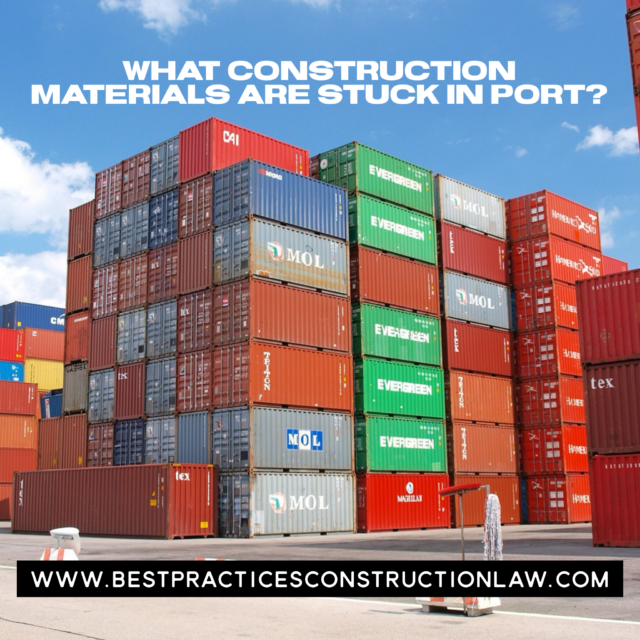
A reader asked me about the specific types of construction materials that may be subject to delays. Geographically, the East Coast ports handle a variety
Stuck at the Docks: Managing Construction Delays and Supply Chain Issues Resulting from the East Coast Ports Strike
At midnight on October 1, 2024, longshoremen and harbor workers at major East Coast ports went on strike, causing significant disruptions to the flow of goods and materials of all sorts, including those essential for the construction industry. The strike has brought operations at ports like New York, New Jersey, Charleston, and Savannah—key entry points
Unlocking the Potential of AI and Chat GBT in Construction Management
The construction industry is one of the most complex and challenging sectors. Projects can be highly demanding and require a significant amount of planning and coordination to complete successfully. However, with advancements in technology, specifically the use of artificial intelligence (AI) and chat GBT, the construction industry can experience a transformation in how it operates.
It’s a Jolly Time of the Year: 5 Tips for Dealing with Construction Labor Issues During the Holidays
- Communicate early and often: Make